No products in the cart.: $0.00
What Is Flow State? And How A Simple Tea Ritual Can Help You Find It

What Is Flow State? Most of us are living in constant distraction. Messages ping, screens glow, and our attention is pulled in a dozen directions at once. Concentrating deeply on a single task can feel almost impossible. Yet there are moments when everything quiets down, when time seems to disappear, worries fade into the background, and we become completely absorbed in what we’re doing.
This experience is known as flow state, and it’s not reserved for artists, athletes, or monks. With intention, space, and the right rituals, flow can become part of everyday life.
What Is Flow State?
Flow state describes a mental and physical state of effortless focus. You’re fully present, deeply engaged, and no longer overthinking each step. Action feels natural rather than forced.
You’ve likely experienced it before:
- Getting lost in a creative project
- Falling into a steady rhythm while running or stretching
- Becoming absorbed in cooking, journaling, or even cleaning
In flow, the mind softens and the body leads. Time feels distorted, minutes turn into hours, or hours pass like minutes. More importantly, flow feels good. It’s calm, rewarding, and quietly energising.
Beyond productivity, flow is closely linked to wellbeing. People who experience it regularly often report higher levels of creativity, contentment, and overall life satisfaction.
Read: Basic Flow
What Is Flow State And Why It’s Essential for Your Mental Wellbeing
Modern life keeps our nervous systems in a near-constant state of stimulation. Multitasking, background stress, and endless information make it hard for the brain to fully settle.
Flow offers the opposite:
- Reduced mental chatter
- Lower stress response
- A sense of intrinsic joy rather than pressure
When we enter flow, parts of the brain associated with self-criticism and time awareness temporarily dial down. This allows us to feel less self-conscious and more immersed, a deeply restorative state for both mind and body.
What Is Flow State And Why It Feels So Effortless
Before exploring how to enter flow, it helps to recognise what blocks it:
- Constant notifications and screen-switching
- Tasks that feel either too easy (leading to boredom) or too hard (triggering anxiety)
- Shallow breathing and a tense body
- Fatigue, poor sleep, or emotional overload
Flow doesn’t happen by accident. It requires space, like mental, physical, and emotional.
How to Gently Invite Flow Into Your Day
1. Choose an Activity With “Just Enough” Challenge
Flow thrives when a task stretches you slightly without overwhelming you. If it’s too simple, the mind wanders. If it’s too difficult, stress takes over.
Offline activities are especially powerful, brewing tea, painting, gardening, journaling, or even washing dishes. These tasks anchor attention in the present moment and engage the senses.
2. Slow the Breath
The breath is a direct line to the nervous system. Flow tends to arise when the body feels safe and regulated.
Try this simple pattern:
- Inhale for 4 counts
- Exhale for 6–8 counts
- Continue for 3–5 minutes
As the breath becomes smooth and rhythmic, the mind often follows. At a certain point, you stop controlling the breath and start listening to it (a subtle gateway into flow).
3. Create a Tea Ritual
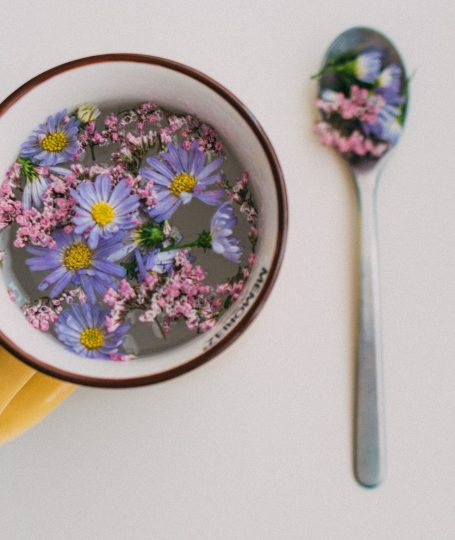
Brewing tea is a natural bridge into flow state. It’s slow, sensory, and intentional.
Notice:
- The warmth of the cup
- The aroma as the tea blooms
- The colour deepening in the water
- The quiet pause before the first sip
This small ritual signals safety to the nervous system and invites focus without effort. Herbal and floral teas, in particular, support calm alertness, helping the body settle while the mind stays clear.
4. Use Sound Wisely
Sound bypasses analytical thinking and works directly on the nervous system.
For focused flow:
- Choose lyric-free music or gentle rhythms
- Avoid overly stimulating or unpredictable tracks
- Repetitive, steady beats help the brain settle
Silence can be equally powerful. Even a few minutes without background noise allows attention to return inward.
5. Move in Repetition
Repetitive movement is one of the fastest ways to enter flow. Yoga, walking, swimming, stretching, or slow cleaning all count.
When movement, breath, and rhythm align, thinking naturally fades. You stop analysing the experience and start living it.
6. Hum or Soften the Voice
Gentle humming or toning stimulates the vagus nerve, encouraging the body’s rest-and-digest state. Try combining a long exhale with a soft hum. The vibration anchors awareness in the body and creates a calm, focused alertness (ideal conditions for flow).
Protecting Your Energy Matters
Flow is far easier to access when you’re rested and supported. Poor sleep, chronic stress, and harsh self-talk all make it harder to drop in.
If your inner critic is loud, flow becomes elusive. One gentle practice is to notice negative self-talk without engaging it, creating distance reduces its grip and makes space for immersion.
Flow as a Daily Practice, Not a Goal
Flow isn’t something to chase or force. It emerges when we slow down enough to be present and that exactly What Is Flow State?. Simple rituals, like mindful breathing, intentional movement, or a quiet cup of tea. Create the conditions where flow can naturally arise.
At Tea Therapy Singapore, we believe wellbeing doesn’t come from doing more, but from being more present. In a world that’s always rushing, flow is your invitation to soften, focus, and return to yourself, one mindful moment at a time.